


Most of the bridges are built with arches, one of the most robust construction methods in history. Each stone is laid in tension against the others, and the weight is distributed evenly down into the foundation. That's why the bridges are still standing strong, even without mortar, and have withstood weather, time and heavy loads.
For people who lived here hundreds and hundreds of years ago, stone bridges were important transport routes. They linked villages, provided safe passage in a hilly landscape and made trade possible. Today, the bridges remain as small cultural monuments. Expressive traces of everyday life and journeys through Dalane before the advent of modern roads.
[display_google_map display=”localmap” elements=”10089, 10152, 10150, 10147, 10144, 117″ debug=”FALSE”]
Svalestad bridge - Helleland
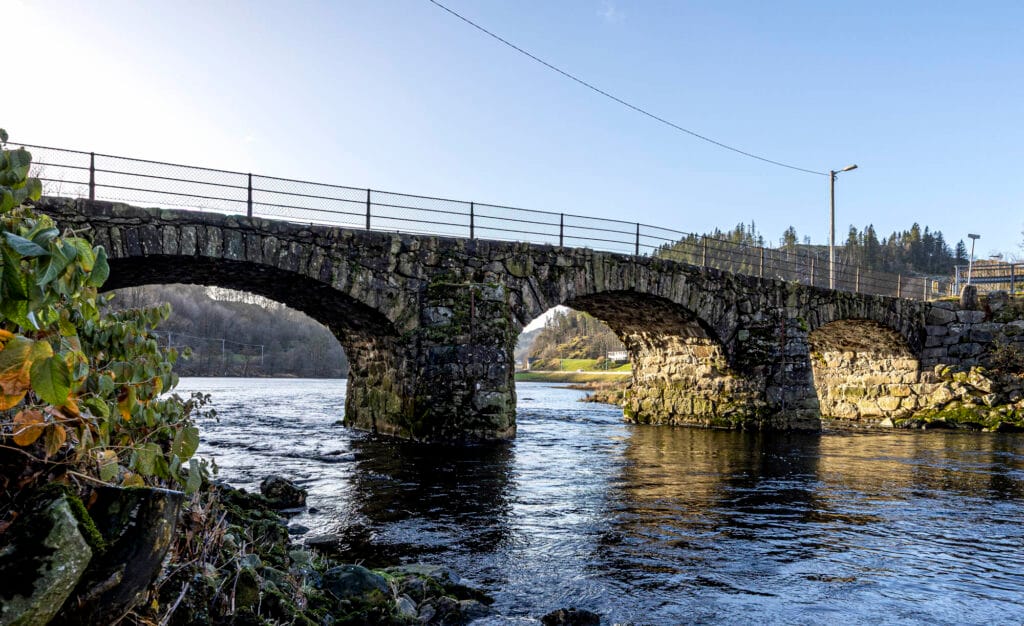
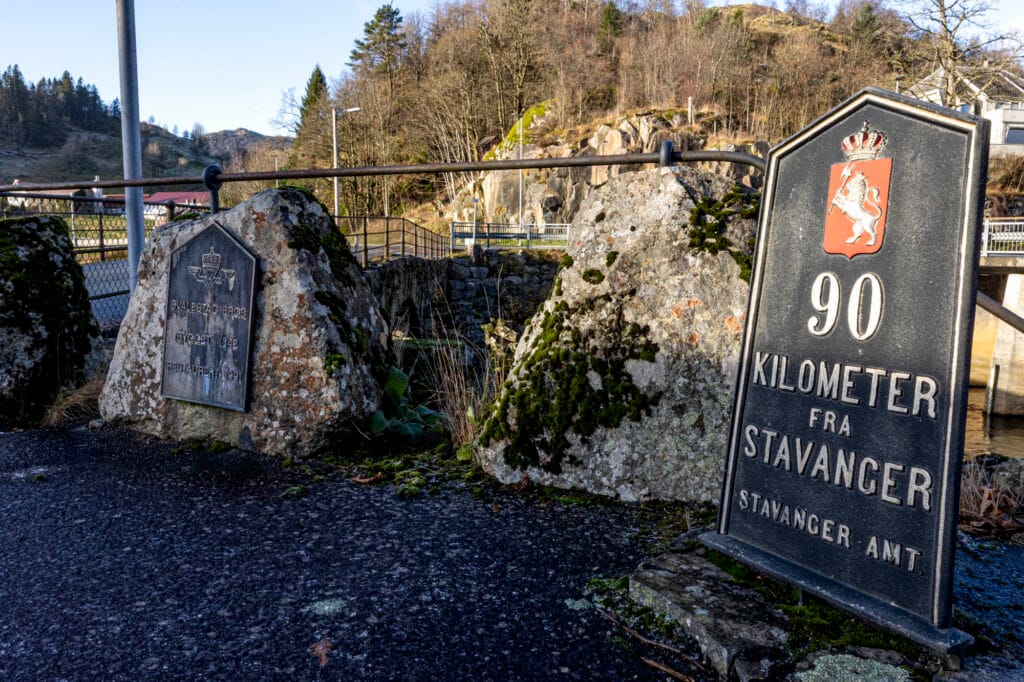
The Svalestad stone bridge was built in connection with the West Norwegian Main Road in 1842. The bridge has 3 arches and is located in Helleland's old town centre, by the E39. It is 34.1 metres long and 5.2 metres wide. There is a cast iron railing at the top. The bridge was part of the main road network until 1960.
Sokkatjønn bridge
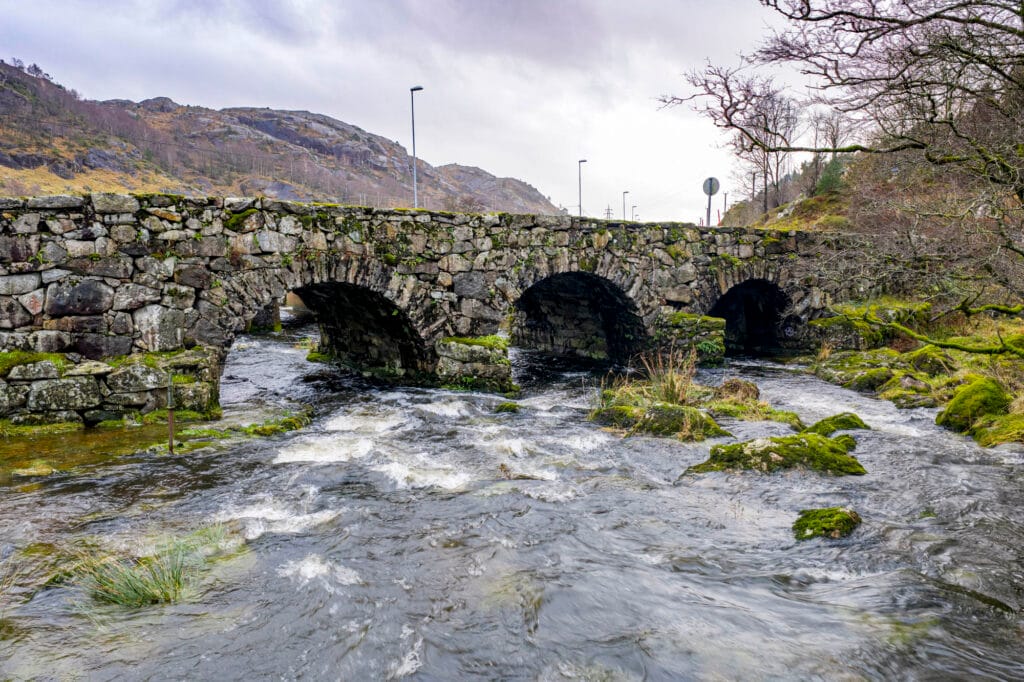
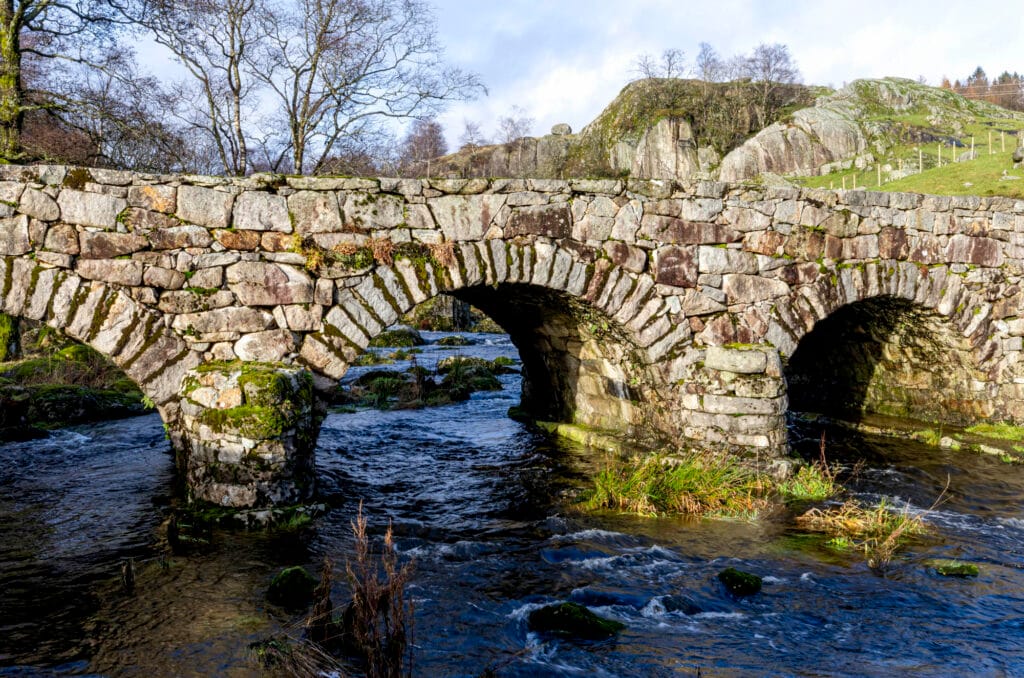
Sokkatjønn bridge crosses the Slettebø river, between Slettebø and Kjelland, and is a cultural monument in Eigersund. Before the bridge was built, this was a ford. It is said that it got its name because the river used to be called «Sokkatjønn», because people on their way to church used to put their socks on there after wading across the river.
The bridge was built in 1841/1842 as a stone arch bridge with three arches, walled in natural stone. This bridge was built as part of the Vestland main road between Kristiansand and Stavanger. Later, the bridge became part of Route 9, where a new bridge was opened in 1957. The bridge has been preserved in connection with a rest area by road 426, Krossmoveien. Sokkatjønn bridge has a length of 26.5 metres and a total width of 5.3 metres. The carriageway measures 4.3 metres.
Hestvad bridge
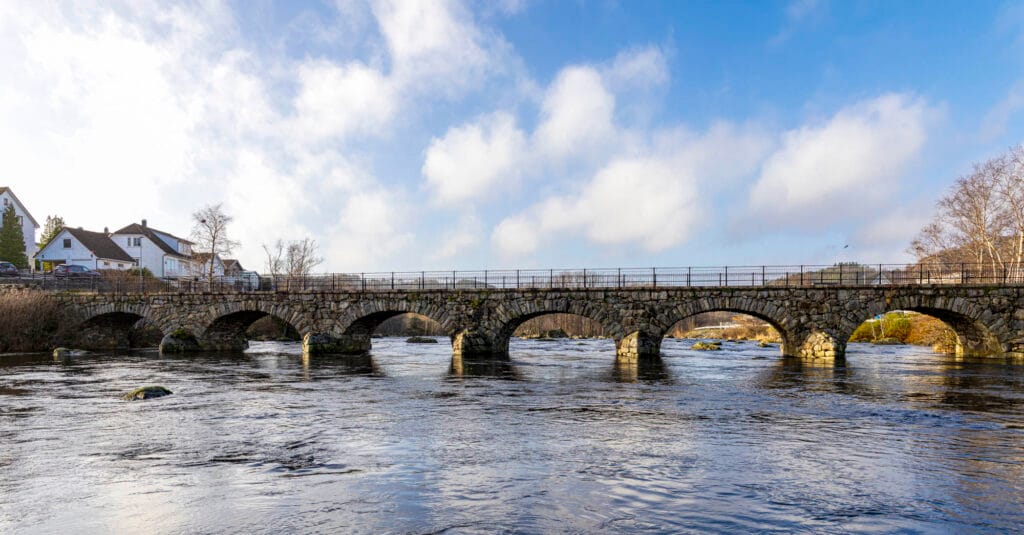
Hestvad bridge crosses Eieåne where it emerges from Slettebøvannet. This is a stone arch bridge with six spans. It was built by Andreas Aanensen in 1851 as part of the connection between the town of Egersund and the Vestlandske Hovedvei. Hestvad bridge was used as a carriageway until 1980. At that time, a new concrete bridge was completed upstream of the old stone arch bridge. Since then, Hestvad Bridge has served as a pedestrian and cycle path.
Nose bridge
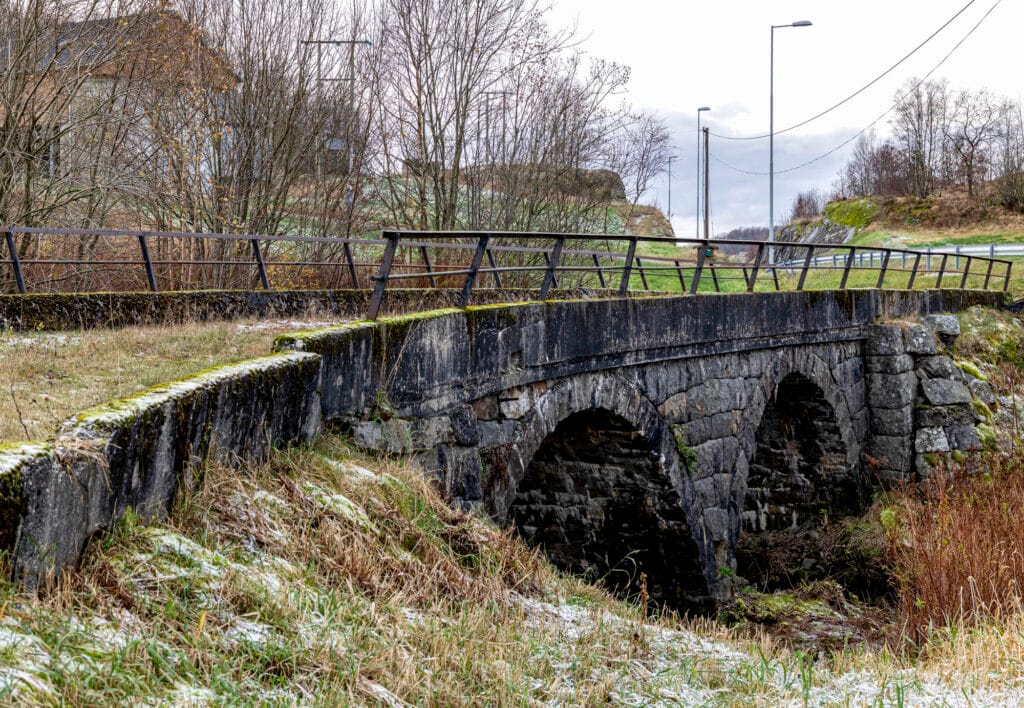
Stone bridge from 1900 with two arches located approx. 2 kilometres west-southwest of Krossmoen, near Klungland. Nese bridge is another visible sign in Dalane of the remains of the Vestlandske Hovedvei, which was the first systematically planned road between Stavanger and Oslo.
Little Klopp
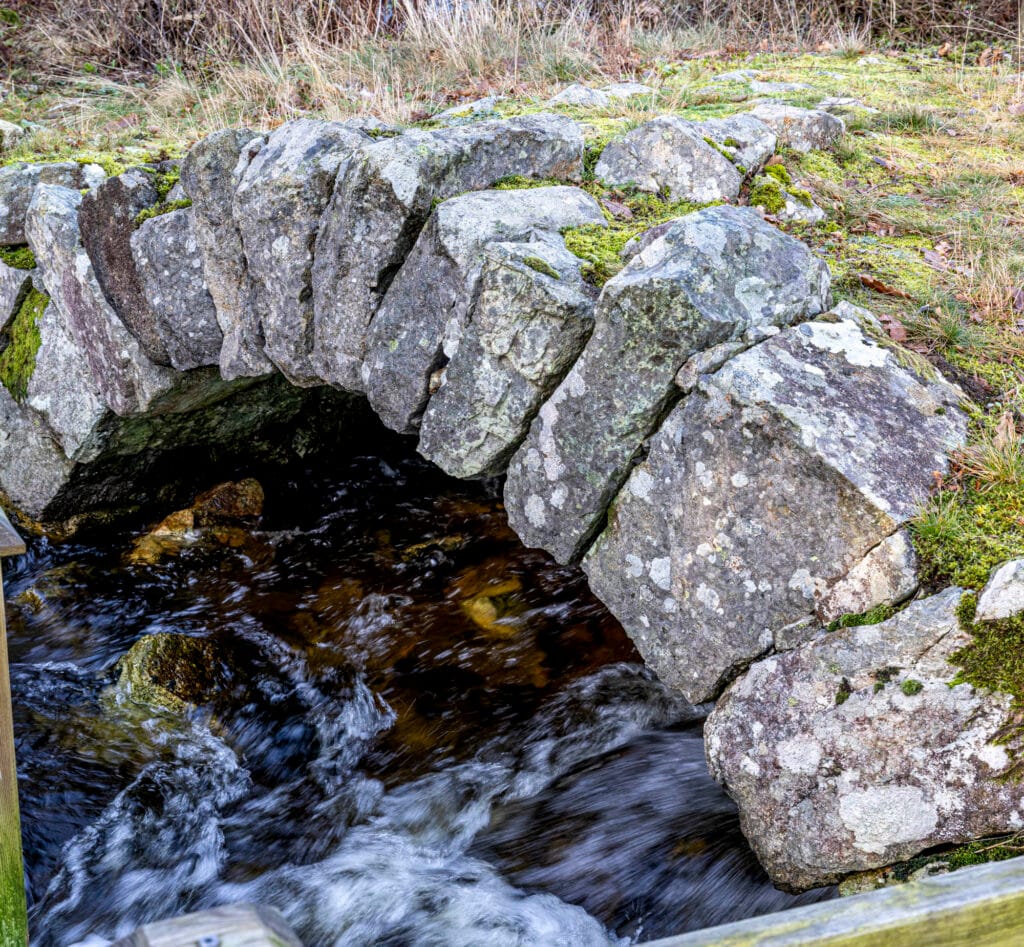
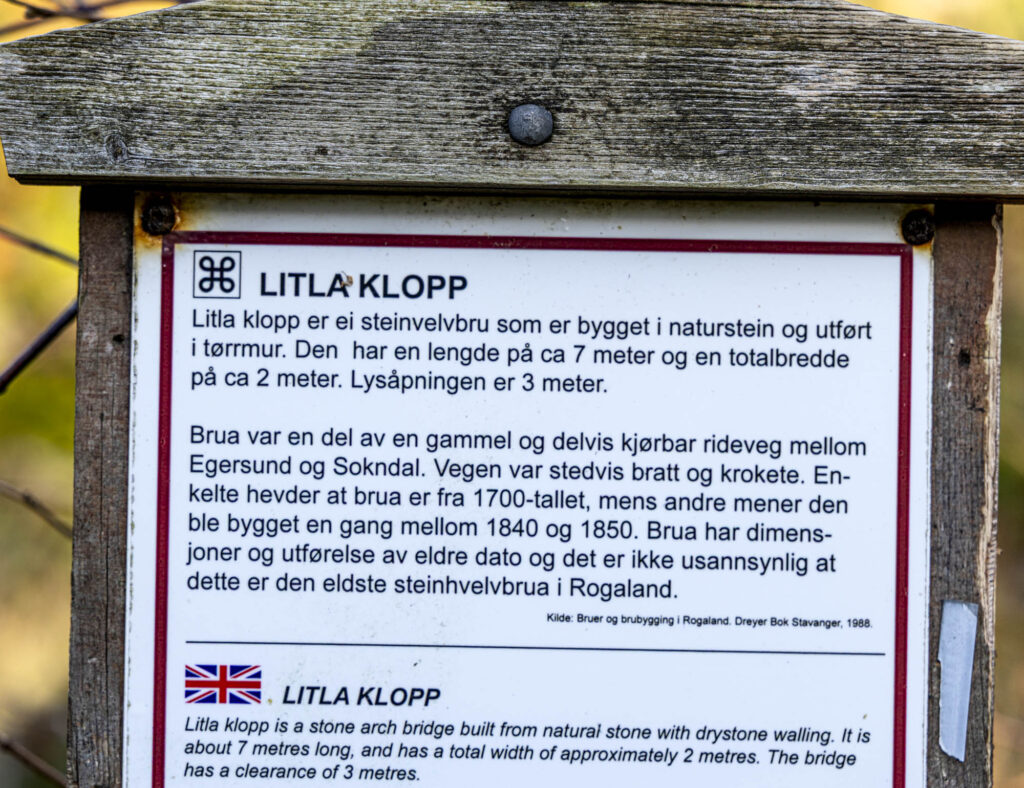
Litla Klopp bridge was built in several rounds, the first time probably sometime in the 18th century. This is thought to be one of Rogaland's oldest bridges. There are also two other small bridges nearby. Litla Klopp can be found at fv. 44 in Stapnes, about 20 kilometres from Egersund. Here you'll also find a small restored mill house from around 1860.
Terland Klopp - Helleland
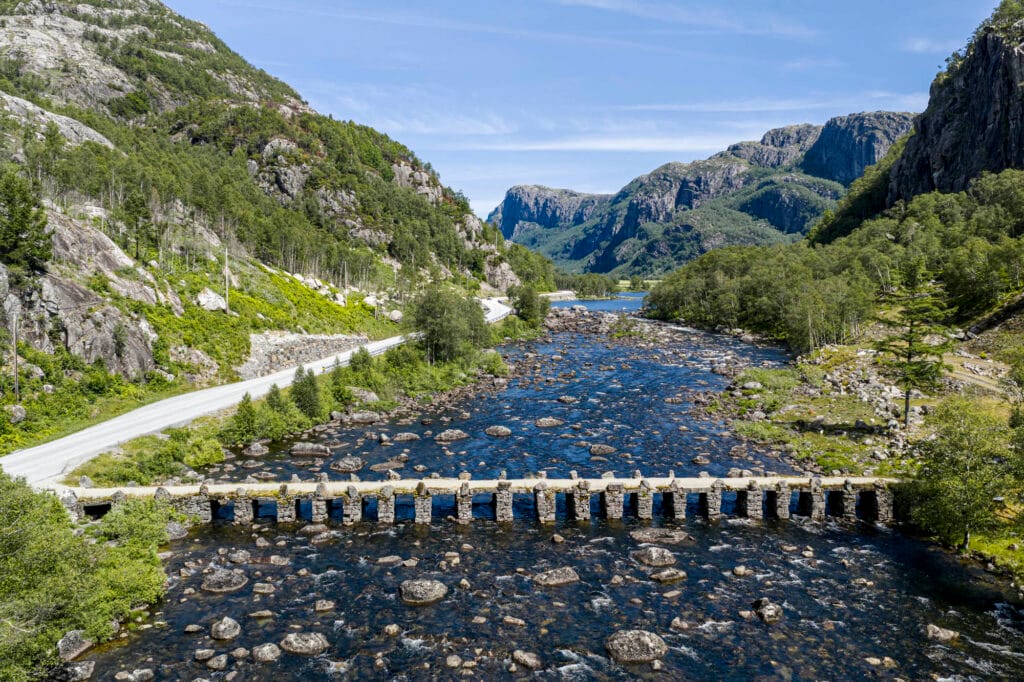
Last but not least, there's Terland Klopp - the best-preserved stone arch bridge in the Nordic region. This 60-metre-long stone bridge is the largest and best-preserved of its kind in the Nordic region. With its 21 light openings with stone slabs above, it is an impressive sight. It's located in Gyadalen on road no. 42 about 15 km from Egersund town centre. You can read more about it here.