

In Egersund, the sculptures tell the town's local stories, mark identity and provide space for reflection. Some works reflect the town's maritime and industrial traditions, while others allow for more modern and abstract expressions. Together, they help to make the urban space richer, more vibrant and more meaningful.
Here's an overview of 15 works of art you can experience in Egersund.
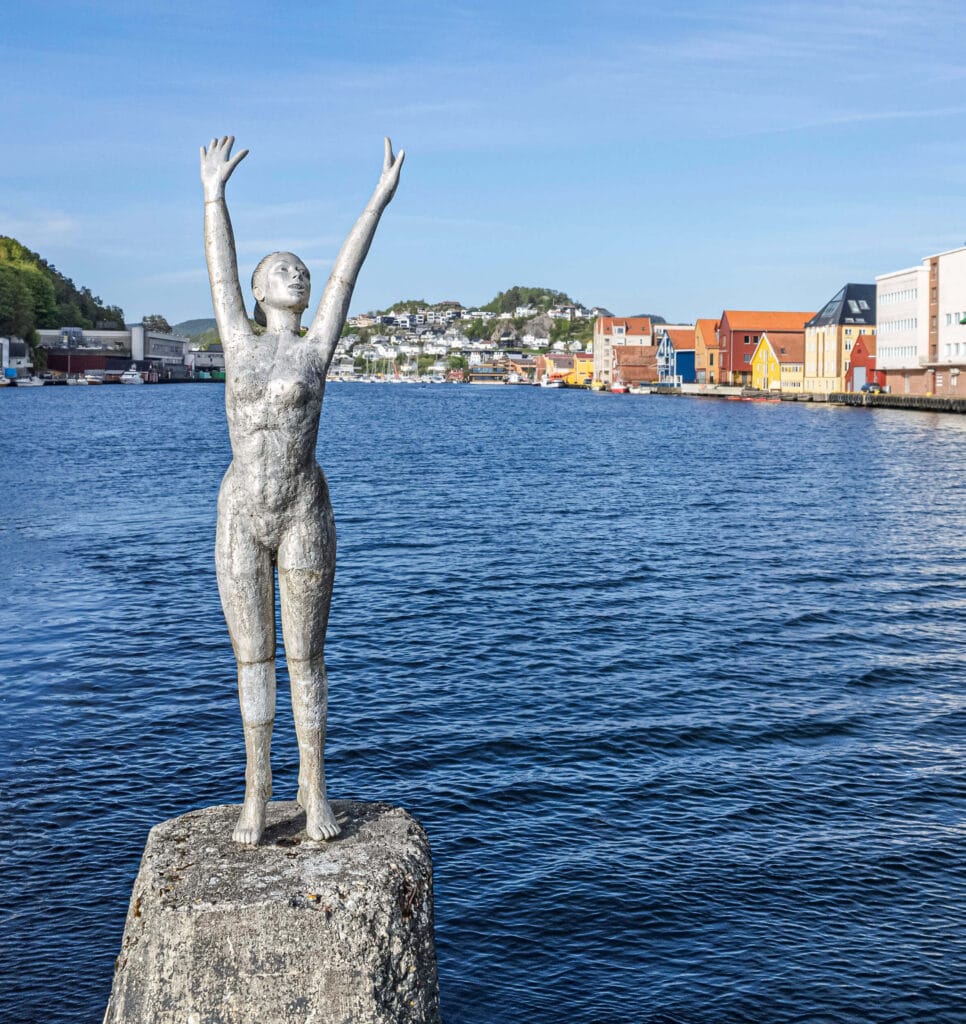
1. Linda - the city's own sea sculpture
She stands in the entrance to Egersund - beautiful, mysterious and seductive!
Many boaters already know her. Stretching gracefully in aluminium, with her back to the city and her eyes turned towards the sea, she welcomes seafarers to Egersund. Is she a woman emerging from the depths? Or a sensual figure luring you in? Artist Hannu T. Konttinen leaves it up to the imagination. The sculpture is located in Lindøygapet, and was unveiled on 29 July 2000 during Kyststevnet with great festivities.
Next time you come by sea, keep an eye out for Linda. She's still standing there, a beautiful sign of welcome, history and pride.
2. The girl with the harmonica
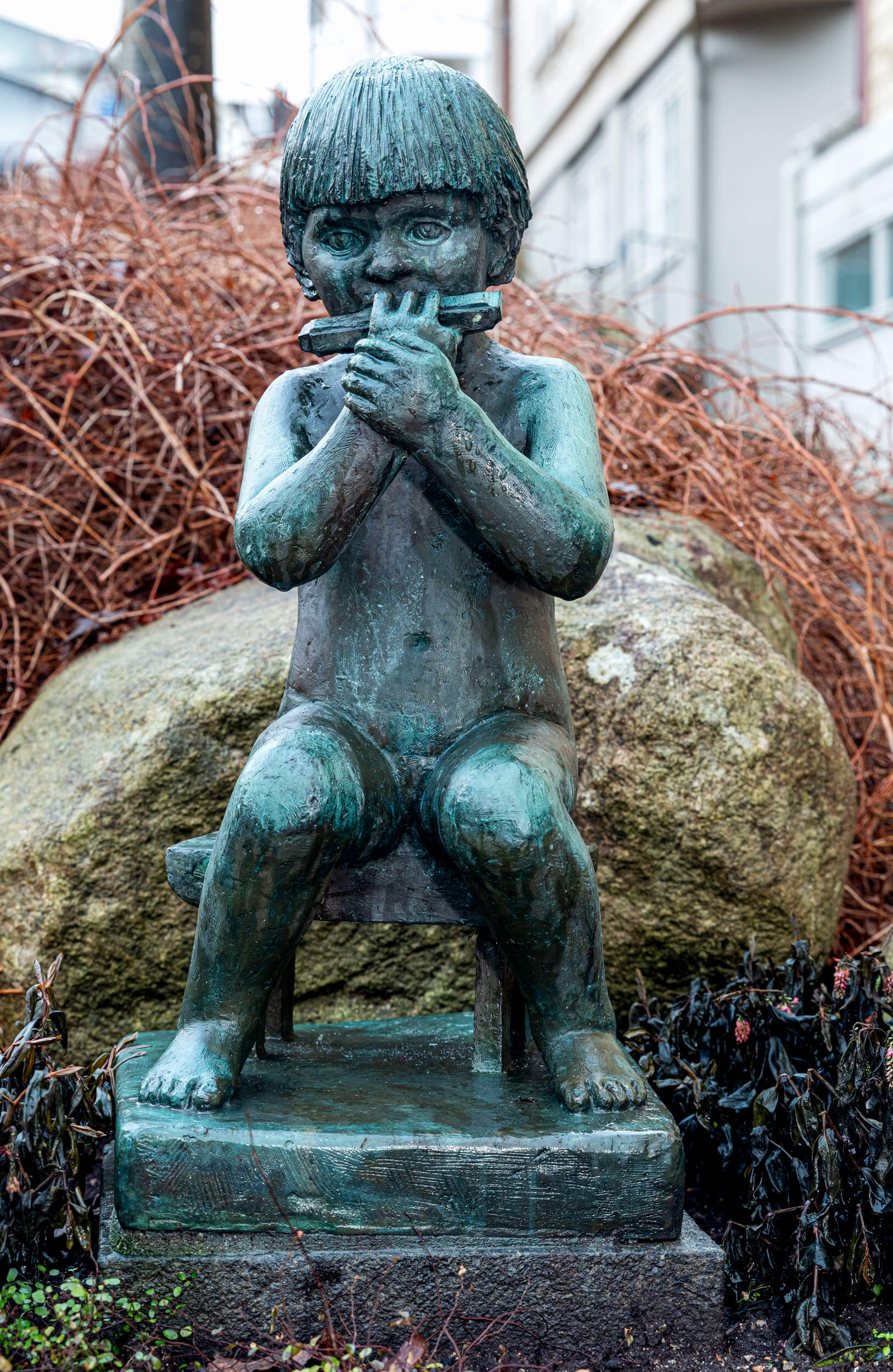
The bronze sculpture stands at the foot of Lerviksbakken. It was created by Kjell Grette Christensen and depicts a girl with a harmonica.
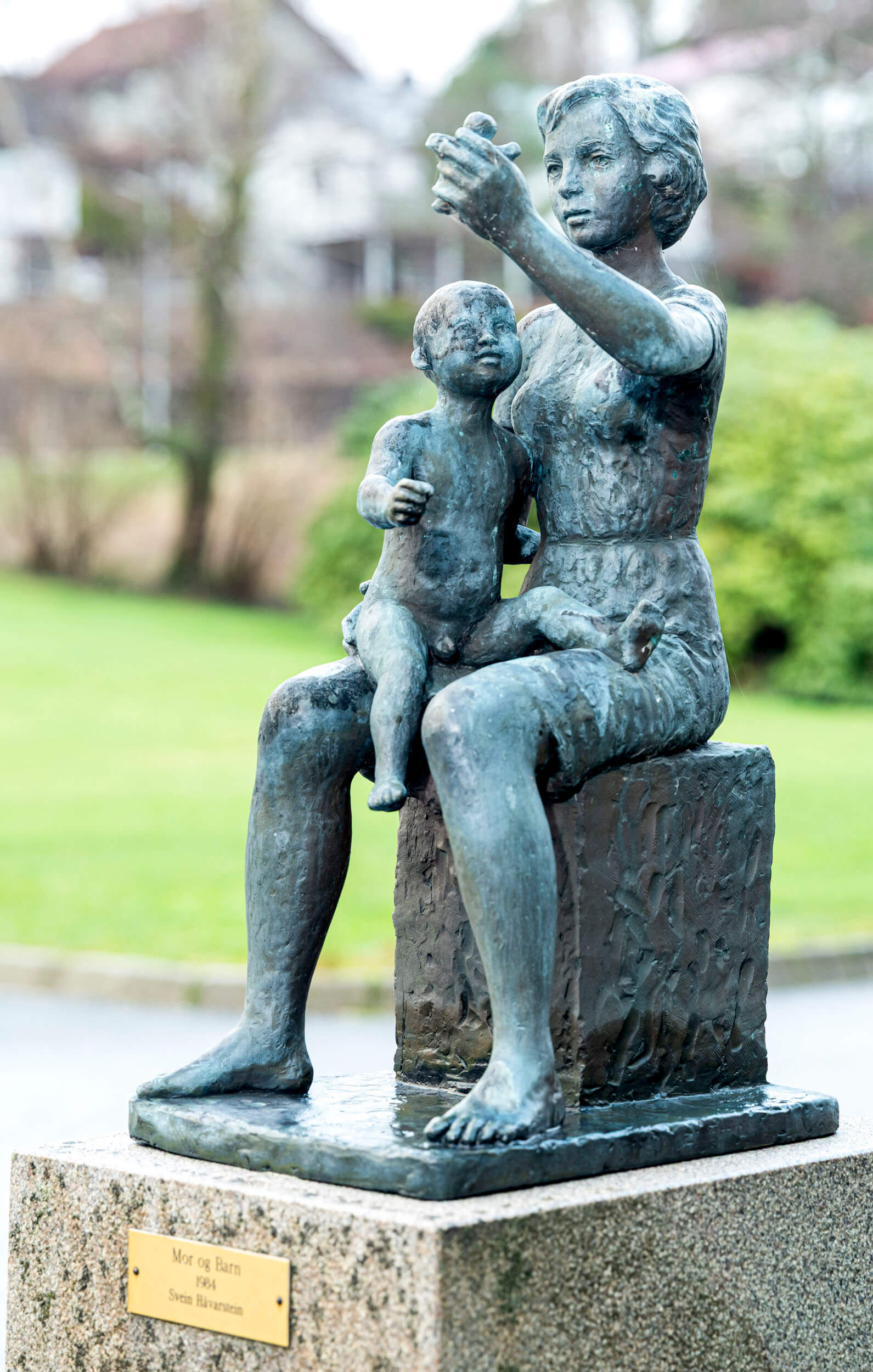
3. Mother and child
Bronze sculpture that stands at the entrance to Eigersund Hospital. It was created by sculptor Svein Håvarstein.
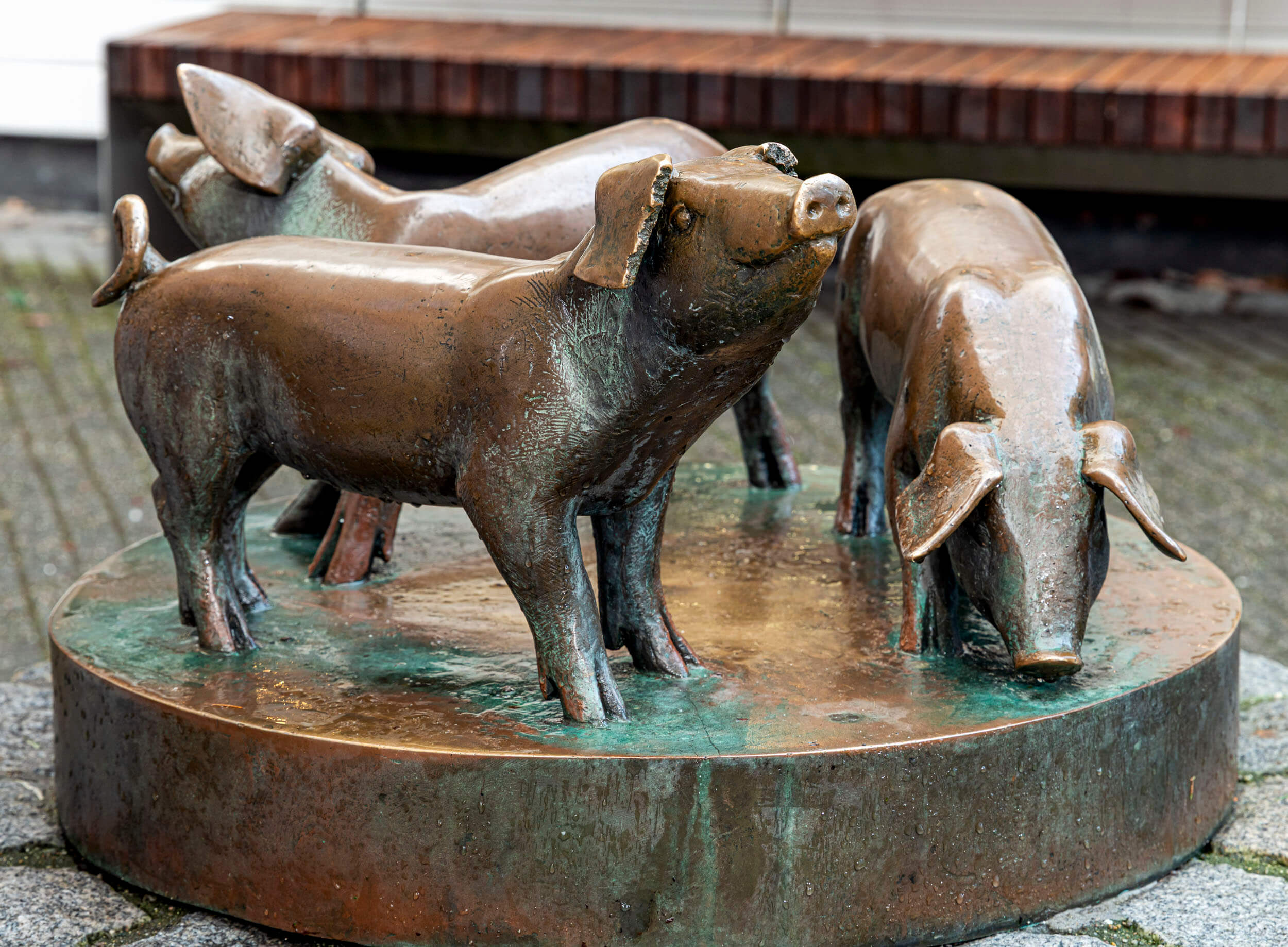
4. Three little pigs
The square at the intersection of Storgaten and Kirkegaten, in the centre of Egersund, is called Grisatorget. The name comes from the fact that this is where the piglet trade used to take place. The sculpture of Three little pigs standing in the square is a reminder of this. It is designed by Skule Waksvik. If you're curious about more details about Grisatorget, you can read this article from Kulturstien in Egersund.
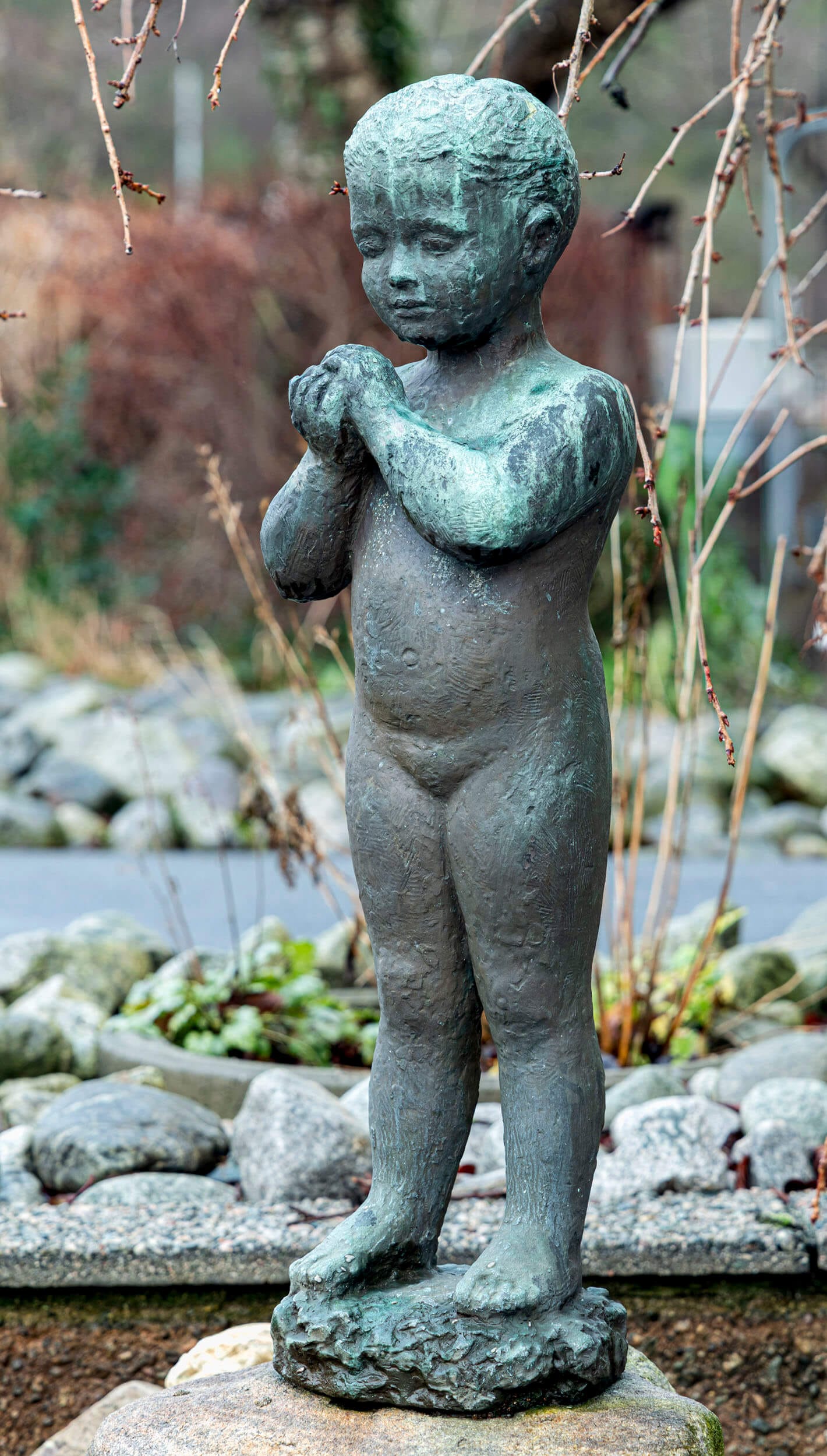
5. Young pike
Sculpture in bronze placed in a green area outside the town hall. It was created by Ørnulf Bast. It was donated to the municipality by Kværner Brug AS in 1974.
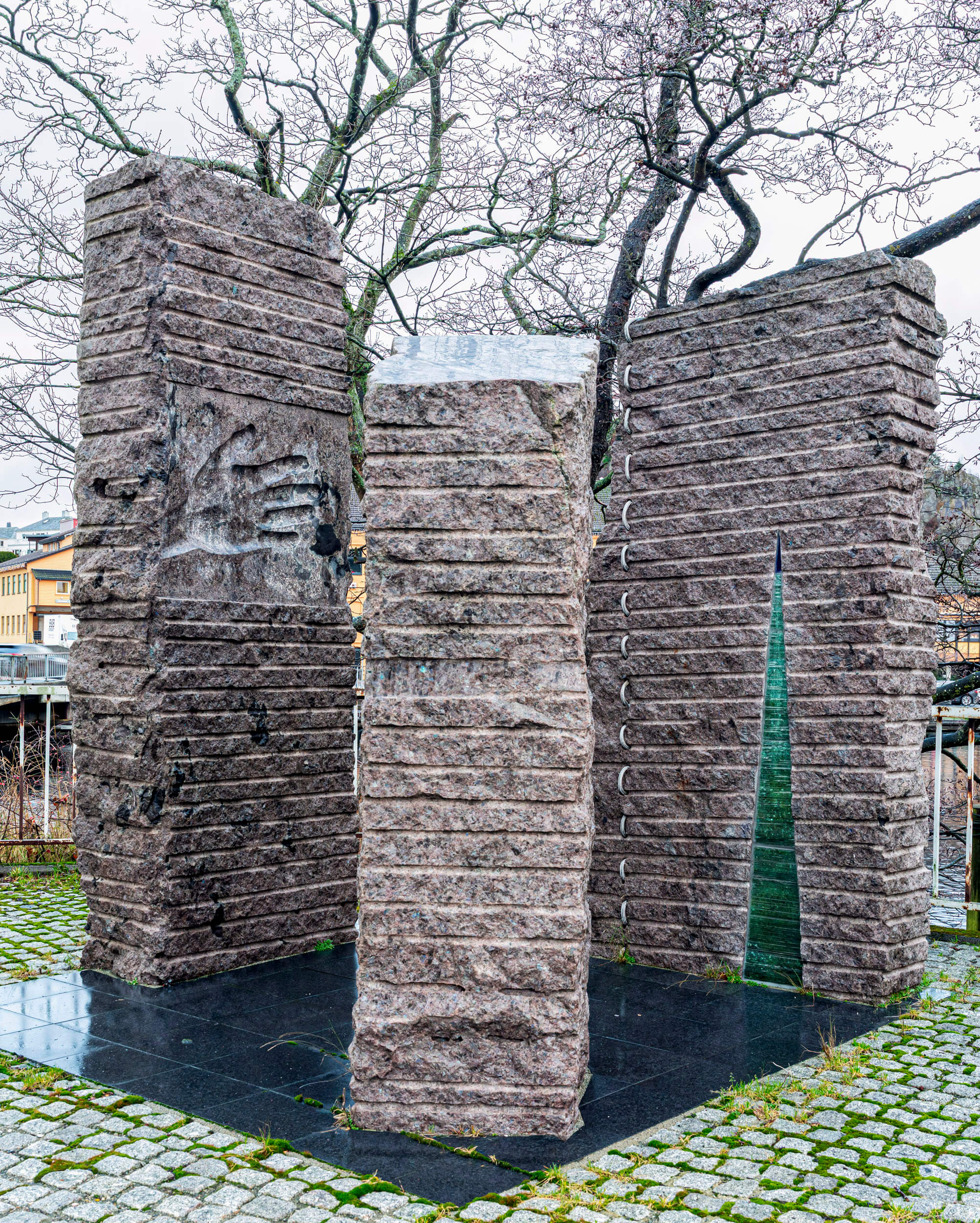
6. The woman's hand - a badge of honour in Egersund
The monument was inaugurated as a tribute to women in Egersund, and was unveiled by County Governor Tora Aasland in 2001. Egersund lawyer Gudrund Aarstad, in collaboration with the Network for Women in Dalane, took the initiative for the monument of honour, which was designed by artist Kari Agner.
The monument consists of three boulders from Sirevåg, with a total weight of around 15 tonnes. The tallest boulder is approximately 3 metres high and bears the symbol «the woman's hand». One of the other blocks has the symbols needle and thread; the needle is set in glass, and the thread runs from bottom to top in the stone.
The stone blocks have both smooth and rough areas, symbolising different phases in a woman's life - according to the artist. The hand symbol has a central place in the monument. Agner has said that the hand represents care, work and the many phases of life. The rough and smooth surfaces of the stone symbolise both hardship and good times, and are intended to reflect an entire life story.
Artist's reflections
Kari Agner worked for about a year and a half to shape the monument. She has described how she let her thoughts wander through the lives of many women while she was carving the stone, and that the hand became a central symbol early on.
Significance for the city
The monument is located in the centre of Egersund and marks a public recognition of women's role in the town's history and society. The work serves as a symbol of women's work, life and their invisible contribution to history.
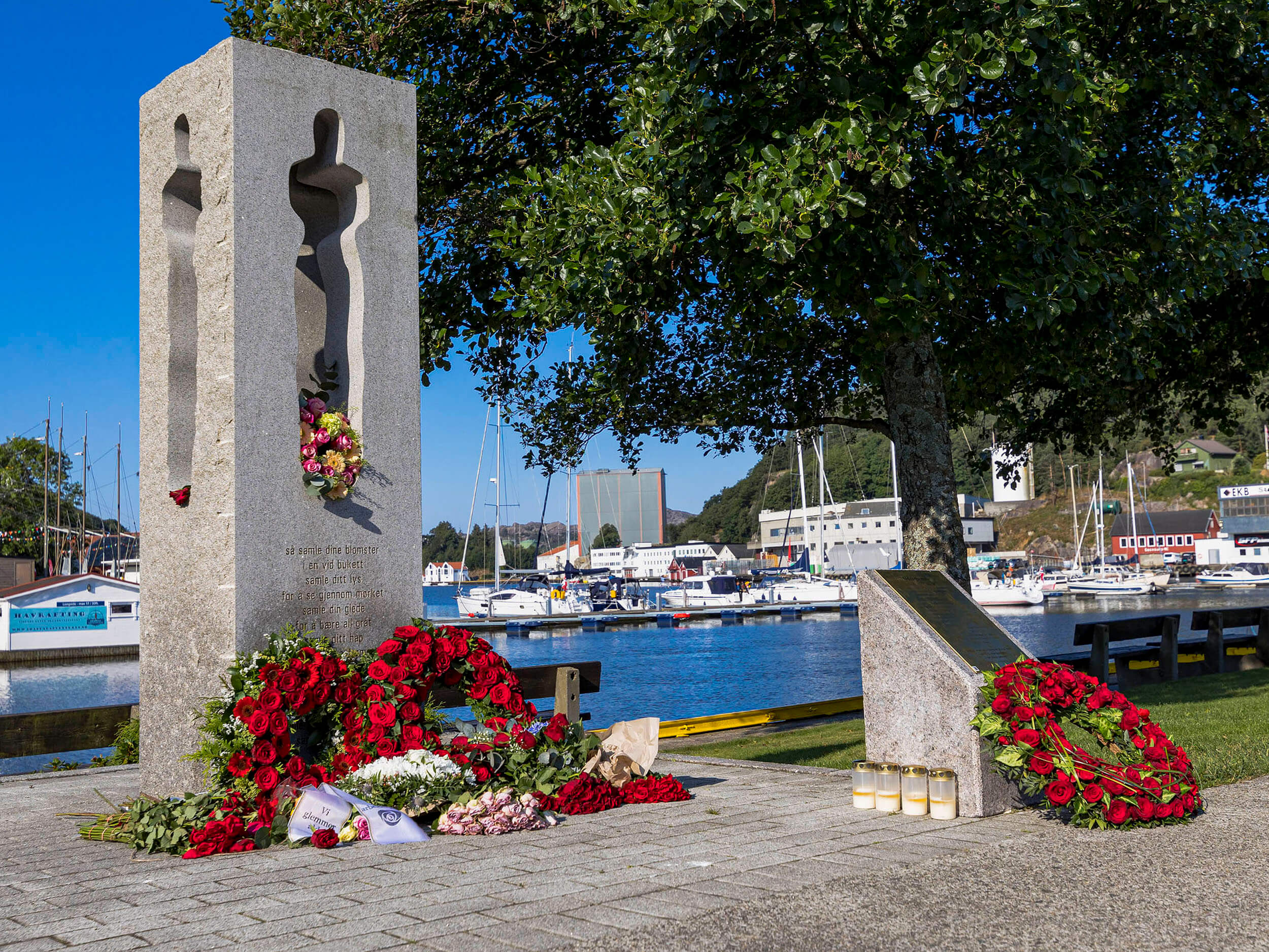
7. The memorial to the victims of 22 July 2011
In the aftermath of the tragedy of 22 July 2011, in which 77 people lost their lives, each municipality that lost someone was offered a memorial from an anonymous donor. Jamil Rafal Mohamad from Eigersund was killed on Utøya, and the municipality wanted to honour her memory by accepting a memorial placed at the mouth of the Lundeå river in Vågen.
The monument, which is carved in Iddefjord granite, is the work of sculptor Nico Widerberg, while the chiselled text was written by Lars Saabye Christensen. The monument was unveiled on 6 October 2012 by Marta-Johanne Svendsen, leader of Dalane AUF.
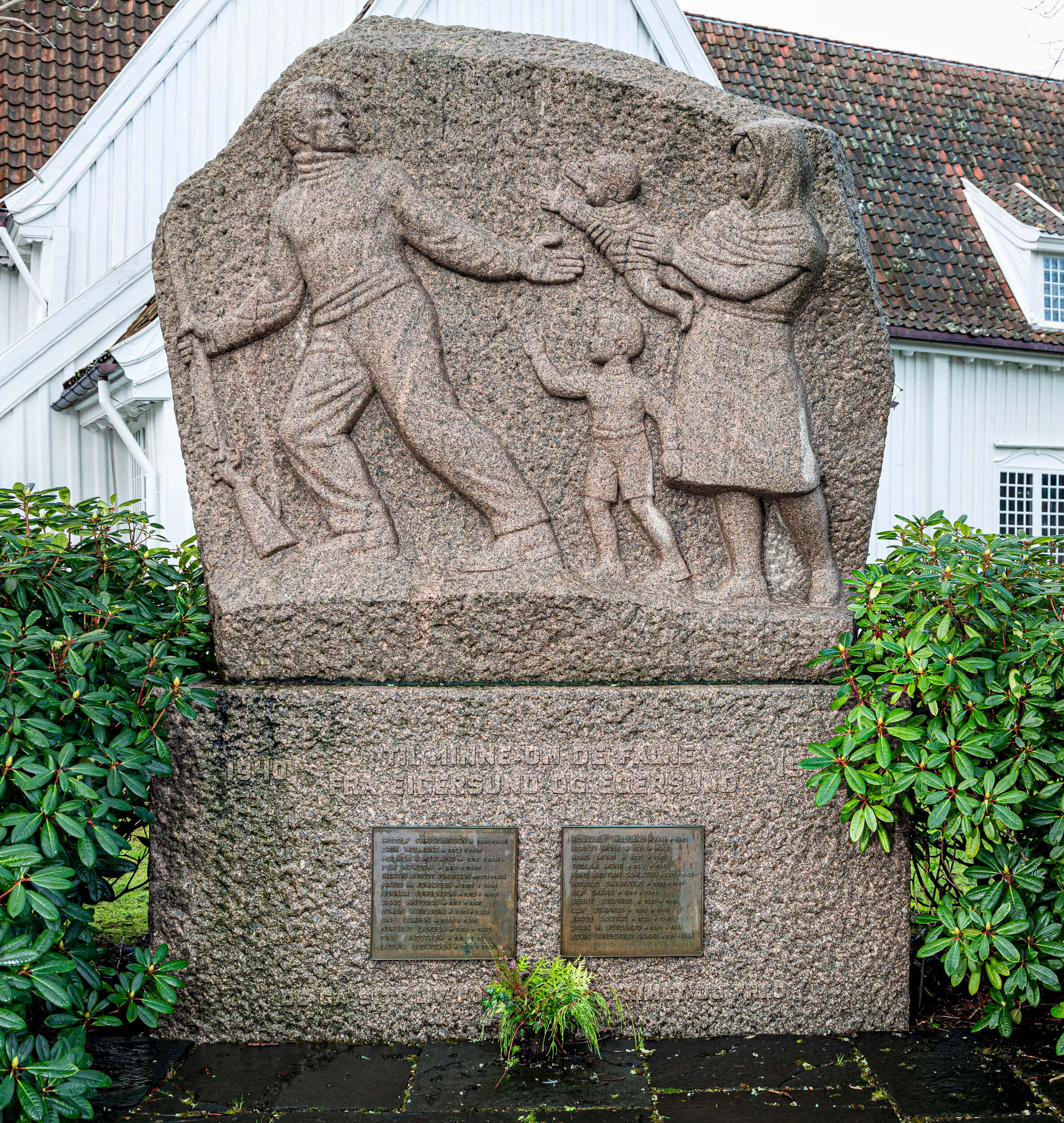
8. Monument to the fallen during the war
Not long after the end of the war, the idea of a memorial to the fallen from the town and the surrounding area was launched by Mikal Hestnes, through Eigersund Fiskarlag. The idea was well received and after extensive fundraising, sufficient funds were raised in 1949. At the time, the monument cost NOK 36,000.
The memorial was created by sculptor Ottar Espeland (1913 - 1996). It was erected outside Egersund church and unveiled on 7 August 1949. At the unveiling, a request was made for the names of the fallen to be recognised on a memorial plaque. This wish was not fulfilled until 9 April 1990, when the name plate with these 25 names was unveiled.
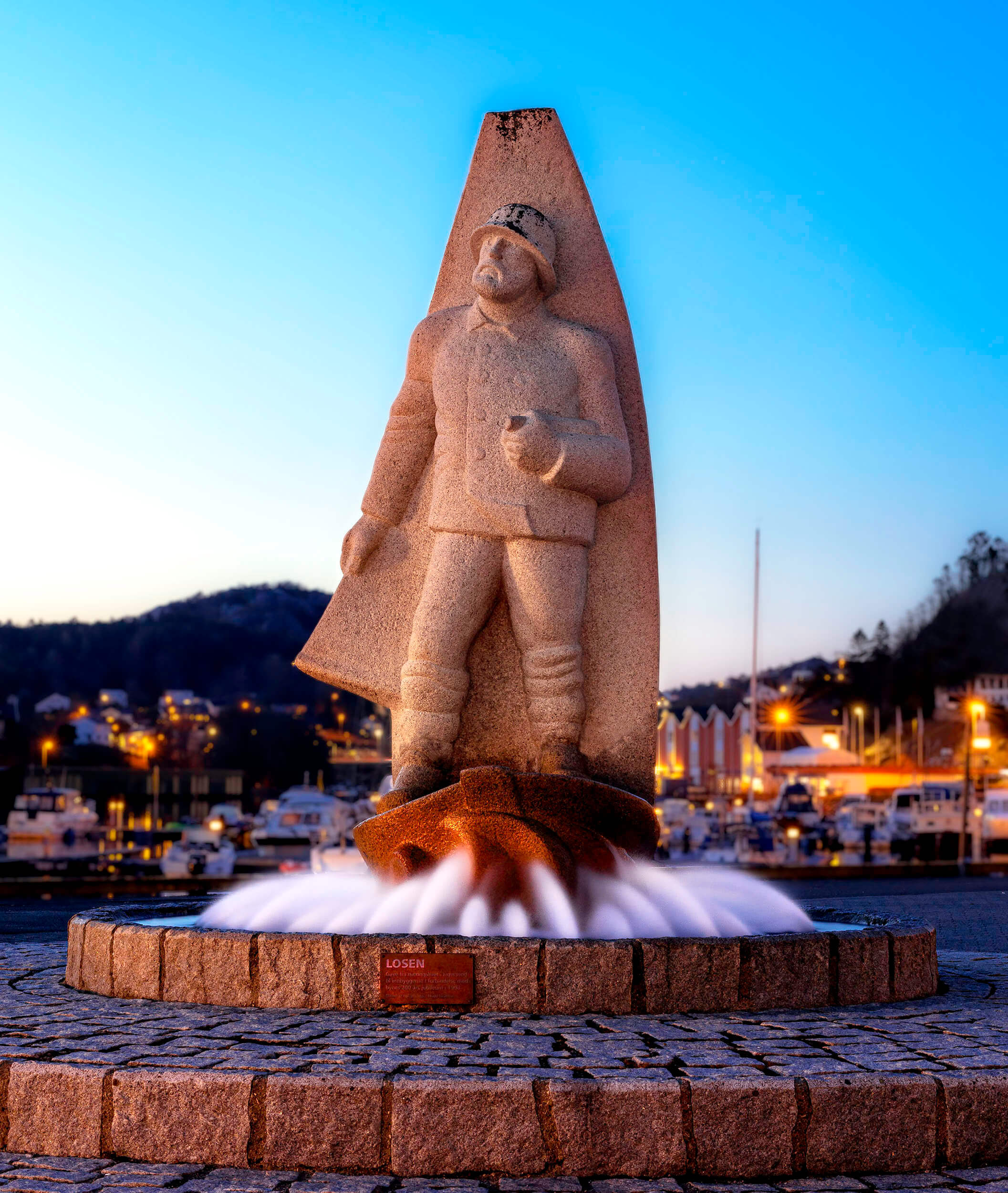
9. Unloading
A memorial to an occupational group that has meant a lot to the coastal population and shipping to and from Egersund. The memorial consists of a sculpture located between Steinbryggen and Jernbanekaien. It was unveiled by pilot Sivert Martin Svanes on 20 June 1998.
The sculpture was the business community's gift to the city on the occasion of its 200th anniversary in 1998. It is made of granite by sculptor Hugo Wathne.
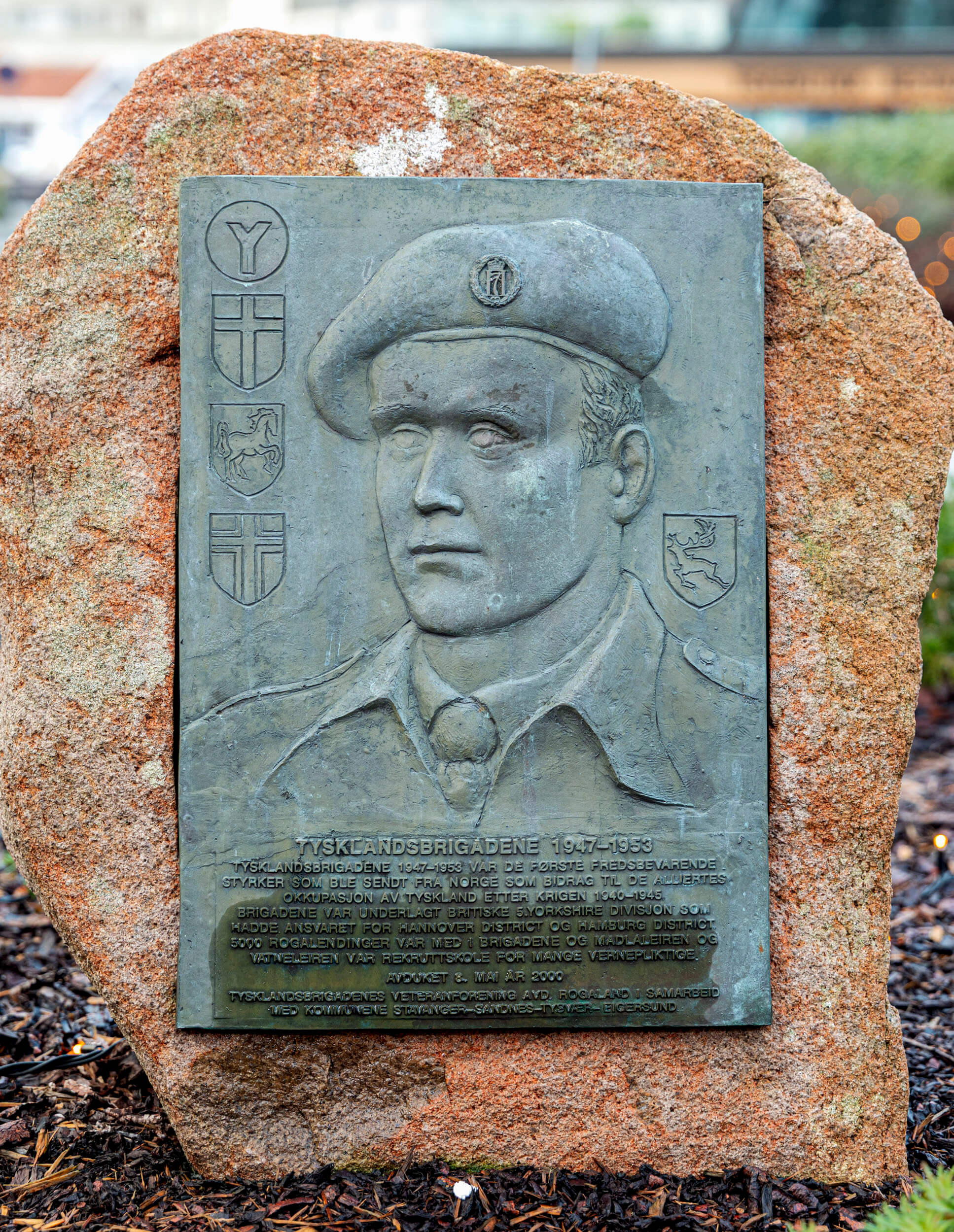
10. Memorial to the German Brigade
The memorial to the German Brigade 1947 - 1953 was erected by the German Brigade Veterans Association Rogaland in collaboration with the municipalities of Stavanger, Sandnes, Tysvær and Eigersund.
The memorial is a relief that stands in the verge between the car park at Arenes and Torget. The relief was created by Hugo Wathne. It was unveiled by Mayor Marit Myklebust on 8 May 2000. Similar memorials were unveiled on the same day in the other three municipalities.
11. The memorial to railway workers
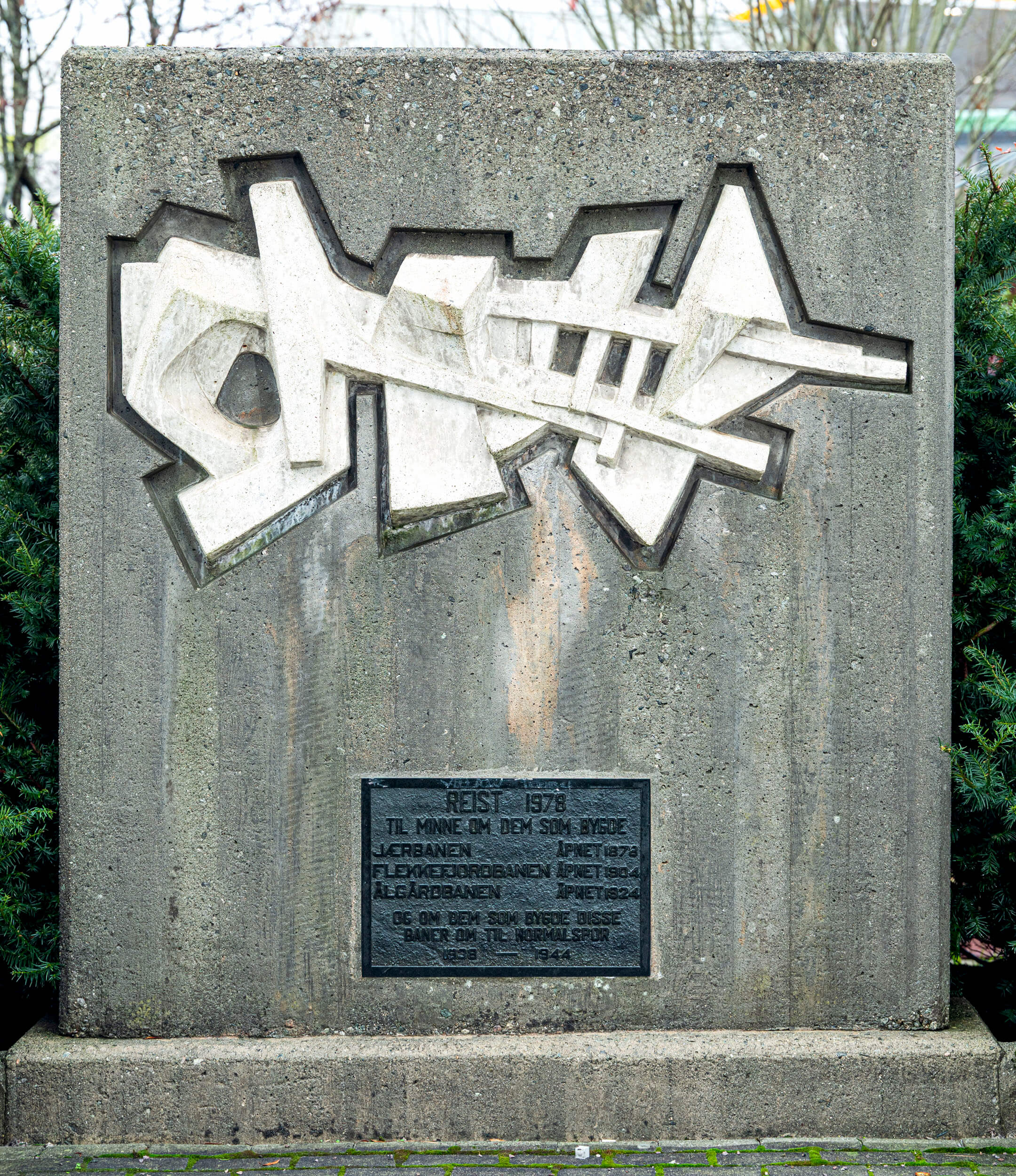
A memorial has been erected at Egersund station to those who built the Jærbanen, Flekkefjordbanen and Ålgårdbanen lines, and those who converted these lines from narrow gauge. to normal track.
The memorial is a relief that symbolises the railway line cutting through the various obstacles. It was erected by NSB, and was placed at Egersund station when it was located roughly in the centre of the former Stavanger railway district. It was created by sculptor Hugo Wathne and was unveiled by Mayor Bjørn Bårdsen on 28 December 1978.
12. Bust of Johan Feyer
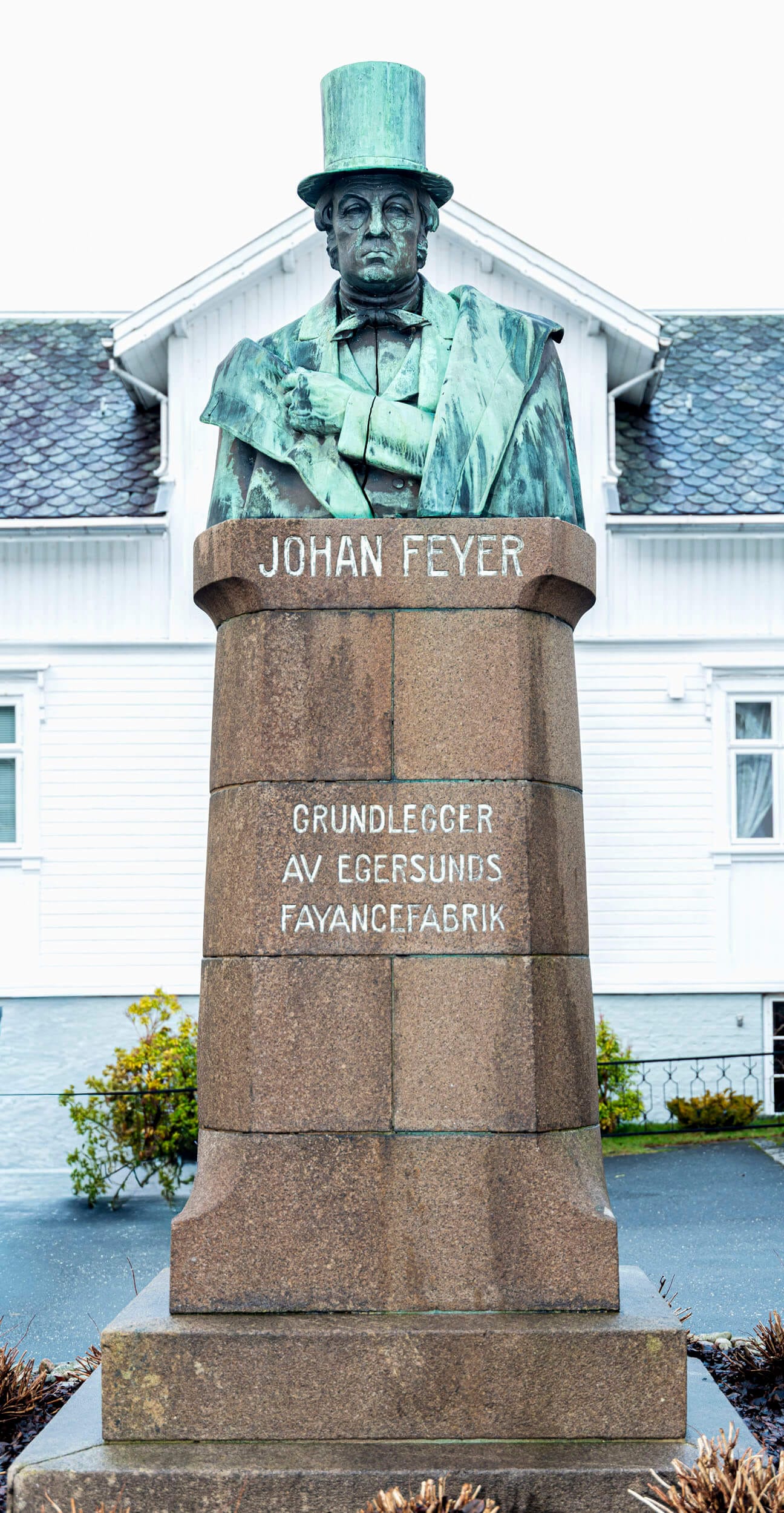
A bust of Johan Feyer stands outside the old Fayance factory, which today houses ALTI Eikunda. In 1901, the chairman of the municipality decided that the time had come to erect a memorial to Johan Feyer, the founder of Egersund Fayancefabrik. A committee was appointed to work on the matter. The necessary funds were raised and a bust was modelled in 1906. It was modelled by sculptor Jo Visdal (1861 - 1923). The bust was unveiled at Tothry on 23 September 1906. It remained there until 1936, when it was moved to its current location on Fabrikkplassen.
13. Bauta of Christen Mølbach
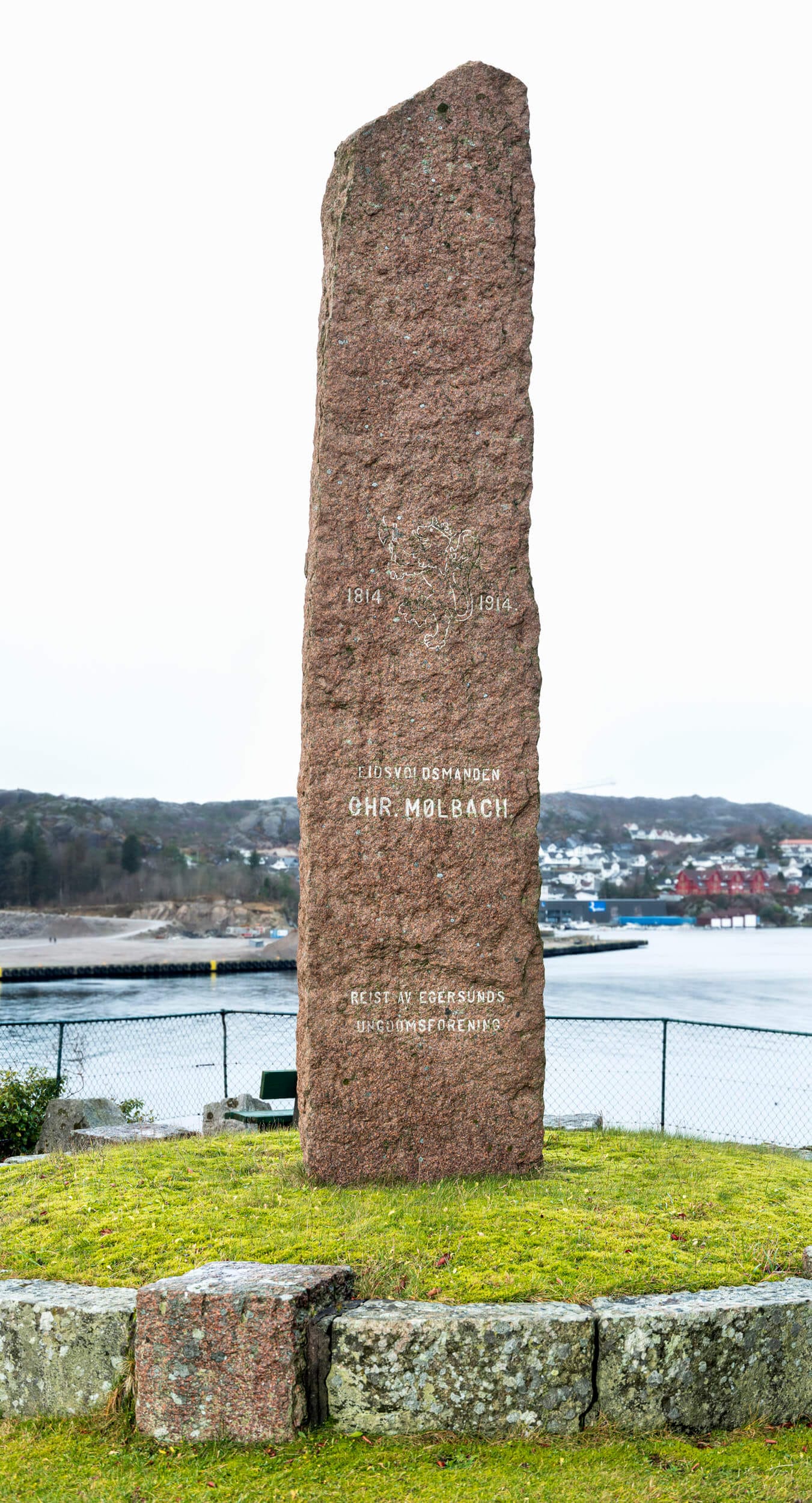
In 1914, the 100th anniversary of the constitution was celebrated all over the country. In Egersund, the Egersund Youth Association thought that honouring the Eidsvoll man Christen Mølbach with a monument would be a worthy way to mark the anniversary. Mølbach was born in Kristiansand, where his father was a merchant. He himself was a deputy magistrate for a time, but then became a merchant in Egersund. In 1814, he was a delegate from Stavanger county to the National Assembly at Eidsvoll. The monument was placed in Fjellparken and unveiled on 17 May 1914. It is part of the story that Christen Mølbach has also been honoured with a street named after him in Egersund, for the 200th anniversary of the constitution.
14. The war memorial at Slettebø
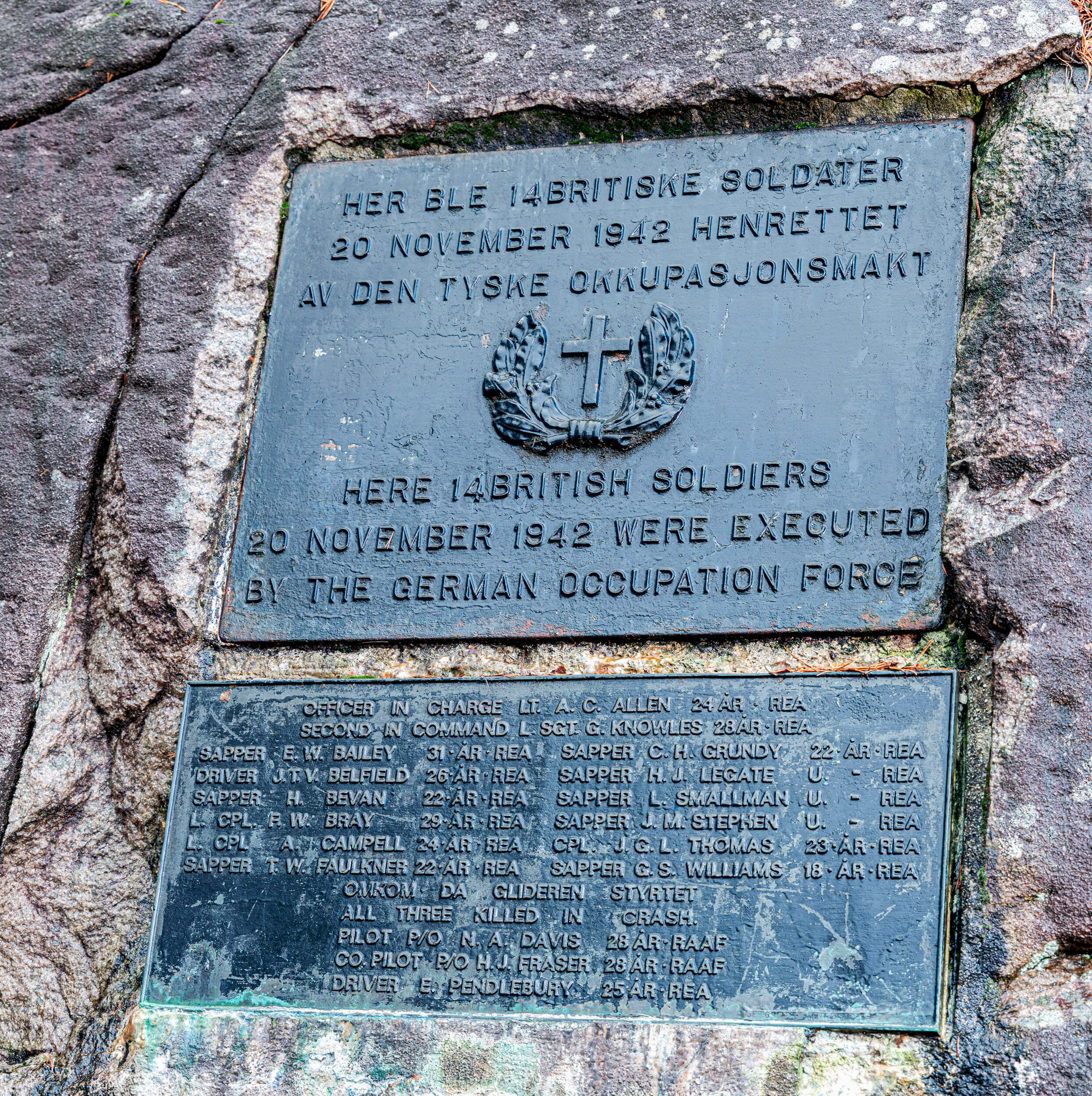
On 19 November 1942, two British aircraft, a tractor and a glider, crashed in the Helleland tracts. The planes were taking part in Operation Freshman, the aim of which was to bomb Norsk Hydro's heavy water plant at Vemork near Rjukan. Everyone in the tractor aeroplane was killed. Of the glider crew, three died while 14 survived. The survivors were executed the following day by the Germans at Slettebø.
On the initiative of the Egersund and Dalane Defence Association, a plaque commemorating the 14 British soldiers who were executed was unveiled on 9 November 1957. However, the memorial plaque is not set up exactly where the executions took place, most likely because the exact location of the place of execution was not known at the time. On the memorial plaque, the number of soldiers executed was initially stated as 11, but the correct number is 14. This has now been corrected. In 1990, a name plate was erected that also lists the names of the three people in the glider who died in the crash.
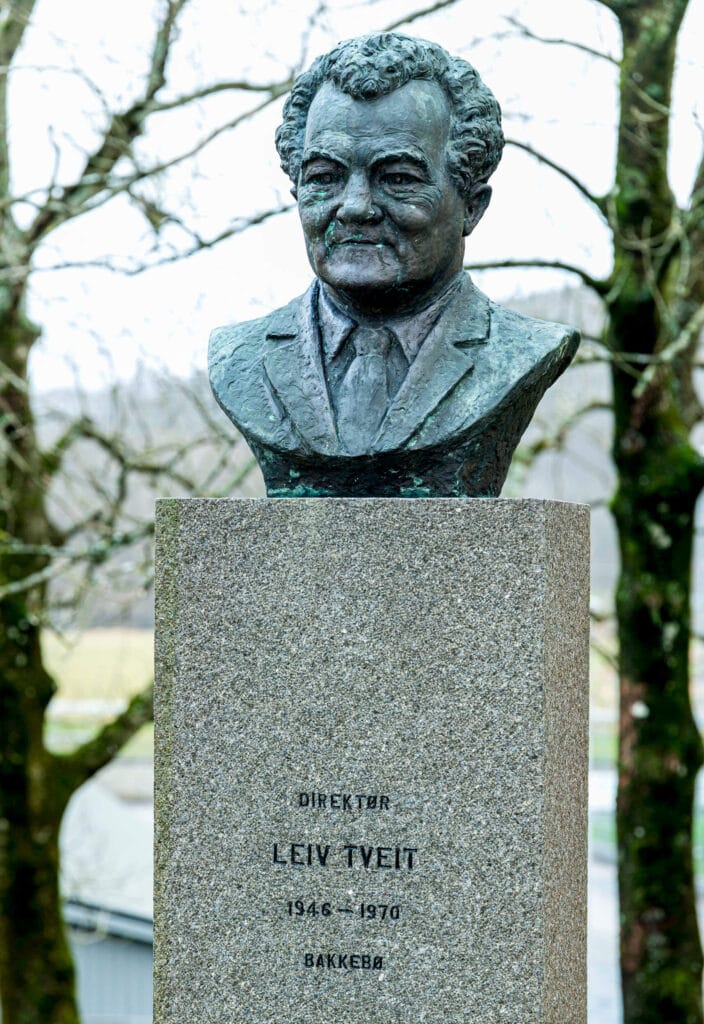
15. Bust of Bakkebø's first manager
A bust of Bakkebø's first manager, Leiv Tveit, placed at Bakkebø church. The bust was created by sculptor Emma Matthiasen and was unveiled by Bakkebø's long-time driver, Jens Tønnessen, on 26 October 1970.