Skadbergsanden
With its varied landscape and pebbles, sand and small rocks, the...
 Search
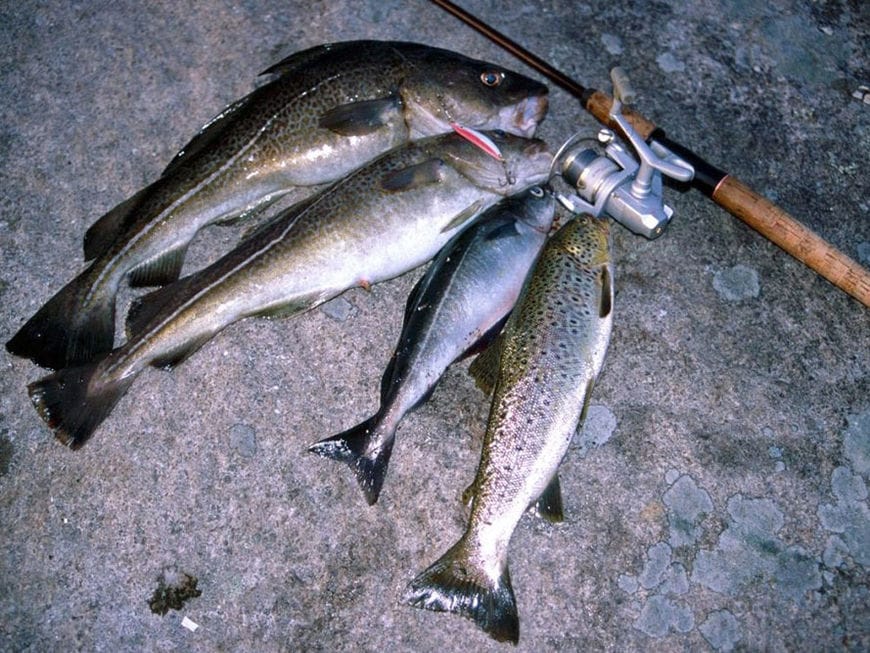
Coastal fishing has long and proud traditions in Eigersund.
Coastal fishing has long and proud traditions in Eigersund. For coastal farmers in earlier times, fishing was a vital part of everyday life and the basis for settlement and industry along the coast. Today, sea fishing is primarily associated with meaningful leisure, nature experiences and recreation.
With its varied archipelago, rich fishing grounds and easily accessible fishing spots, the Eigersund coast is an eldorado for anyone who appreciates fresh sea air and exciting fishing - either from land or boat. Along the coast, there are many good fishing spots from rocky outcrops, breakwaters and in nearby sea areas. A detailed map of sea fishing in Eigersund municipality is recommended for an overview of current fishing spots.
Rod fishing from land often yields good catches of saithe, pollack and cod. Coalfish and pollack are often tempted by small lures fished high in the water, while cod prefer lures and jigs cranked in a calm, vertical zigzag pattern near the bottom. Suspending a rubber worm or a colourful fly can greatly increase the chances of a bite.
Throughout the summer, schools of mackerel regularly appear along the coast. The mackerel are willing to bite and provide exciting fishing for both beginners and experienced anglers.
If you want to fish for species such as flounder, catfish, ballan wrasse and whiting, you should use bait. Oily fish such as mackerel and herring, squid, boiled prawns, bristle worms and the innards of shells and snails are effective baits. However, this type of fishing requires some knowledge of the fish's habitats and local conditions.
Sea trout fishing from land is a popular and challenging form of fishing in Eigersund. The fishing is usually done with light equipment and provides both excitement and great nature experiences. Common tackle includes small, slender lures, flies and sinkers, or fly rods.
The best fishing spots are often found in shallow and varied waters, along beaches and in brackish water areas where fresh water meets the sea. Norda Sundet is a good starting point for those who want to try their luck at fishing.
Before you start fishing, it's important to familiarise yourself with local conservation regulations. Also remember good fishing practice - lean winter sturgeon should be gently returned to the sea.
Winter fishing for roe-heavy cod and haddock on the shallows can be a great experience. Cod migrate towards the coast between February and April, just after spawning herring. Otherwise, the Eigersund coast offers good fishing conditions from a boat all year round.
Whether you're jigging in the shallows and deep channels, or trolling along the shore, islets and reefs, there are plenty of fish. Cod and haddock are pronounced bottom fish and are often fished with a jig combined with a suspension. An effective suspension usually consists of 3-5 orange or red rubber tags. The choice of jig depends on both water depth and temperature.
Haddock can be fished with the same gear as cod, preferably with bait pieces on the hooks, and can also be caught with pure bait gear such as line and groundbait. Depending on the season, you can also hook saithe, pollack, ling, whiting, mackerel, herring and several other species.
In principle, all Norwegian citizens and persons resident in Norway have the right to fish within the fishing limit of 12 nautical miles. The Directorate of Fisheries sets the applicable rules for fishing for saltwater fish.
Norwegian recreational fishermen can use the following gear:
Hand lace
Fishing rod
Machine-driven jig or dorg
Yarn with a total length of up to 210 metres
Liner with up to 300 angles
Up to 20 pots or traps
All landing nets, pots and traps in the sea must be labelled with the name and address of the owner. This applies either on the bladders or directly on the gear.
Lobster fishing is regulated by separate regulations (see fiskeridir.no). During the closed season for lobster, crab pots must be deeper than 15 metres or be equipped with a lobster escape opening. The minimum size for crab is 11 cm (does not apply to catches for your own household).
In principle, salmon and sea trout can be fished with rods from land all year round in the sea. Within 100 metres of the border between the river and the sea, fishing is only permitted during the period when the river is open for fishing. Separate conservation zones may also have been established - always check local regulations. The minimum size for salmon and sea trout is 35 cm.
It is not permitted to fish closer than 100 metres or travel closer than 20 metres from fish farms.
Traffic on land and sea within 50 metres of the outer boundary of the reserve is prohibited from 15 April to 1 August.
It is forbidden to set pots and nets
Plants, mammals and birds with nests, eggs and young are protected
Hunting is prohibited from 1 March to 1 September (in some reserves all year round)
Camping, tenting and camouflage for photography are prohibited
Disposal of waste and other pollution is not permitted
Brand: Laws and regulations for sea fishing can change. Therefore, always keep up to date with current regulations before you go fishing.

Category:
Active, Egersund, Full year, Outdoor activities
See more experiences in Magma Geopark